
University of Bath and The MoSAIC granted award for creative astrophysics outreach
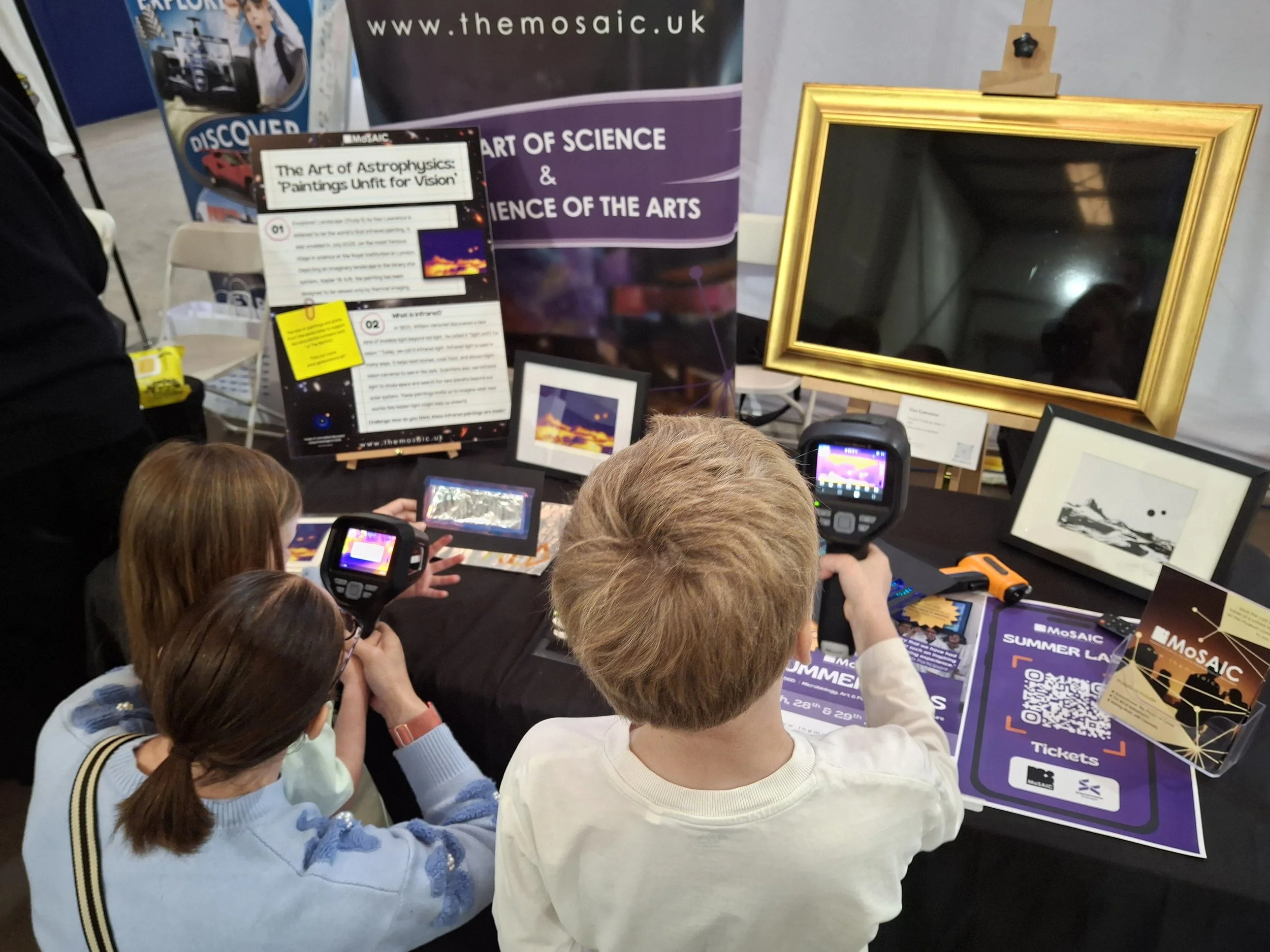
Young participants explore infrared art developed in collaboration by the University of Bath and The MoSAIC.
Reading age: 11-13 years
Estimated reading time: 1 minute
Intended audience: All
Author: Dr Martin Rey, Department of Physics, University of Bath
A new STFC-funded collaboration will use art, creativity and infrared astronomy to inspire young people to engage with the invisible universe.
Led by Dr Martin Rey from Bath’s Department of Physics and interdisciplinary artist and STEAM educator Gaz Lawrence, founder of The MoSAIC, the project will use art, infrared imaging and interactive astronomy experiences to help young people explore some of the most fascinating questions in modern astrophysics. The programme, Art and Astrophysics: Unfit for Vision, was awarded funding through the highly competitive STFC Spark Awards scheme, which supports innovative public engagement projects rooted in frontier science research.
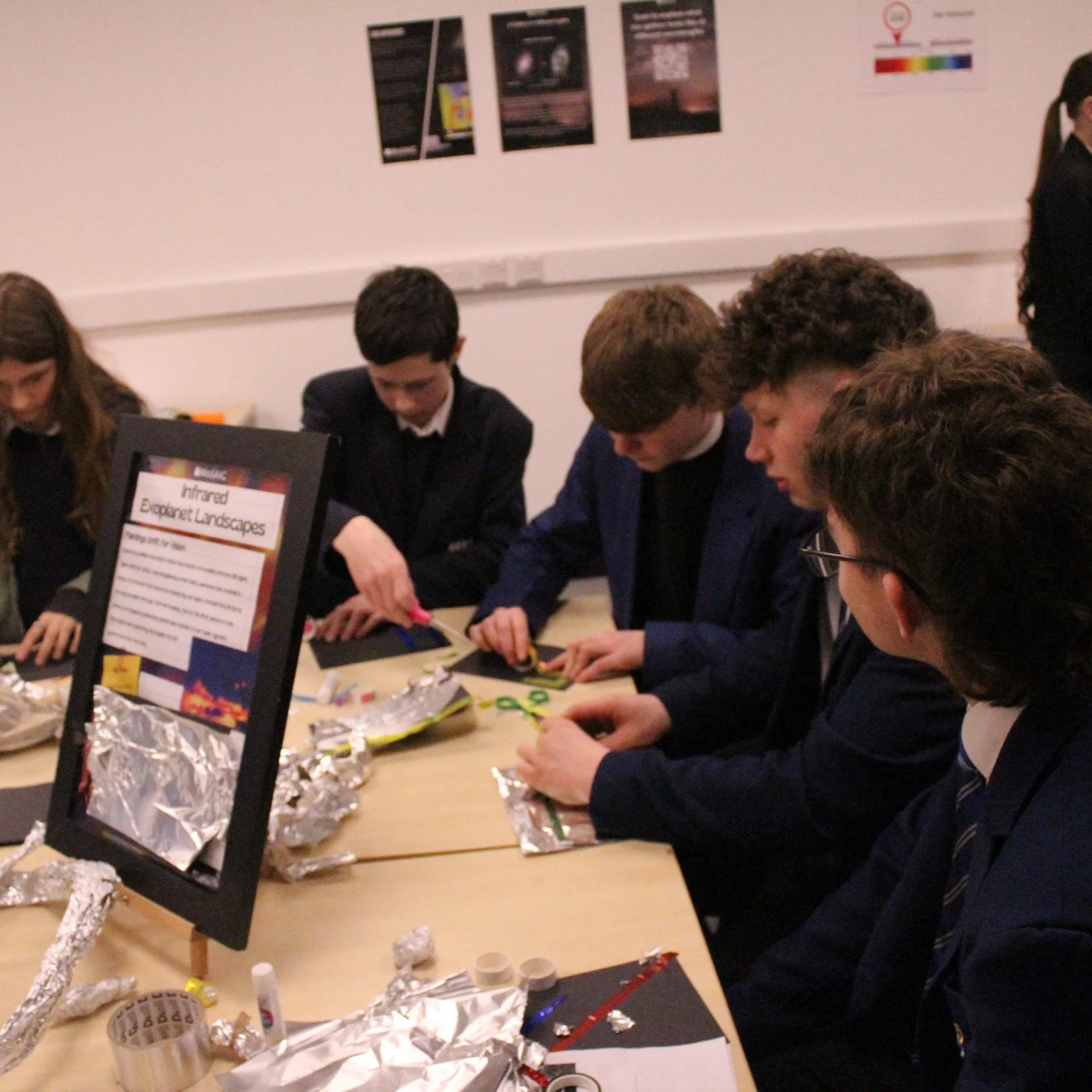
Young participants explore infrared art developed in collaboration by the University of Bath and The MoSAIC.
Over the next three years, the team will work with schools and community partners across Bath and North East Somerset, including Bath Royal Literary and Scientific Institution, to deliver immersive workshops that invite participants to experience the universe in unexpected ways. Using heat-sensitive artworks that emit infrared light, thermal imaging cameras and visualisations inspired by real galaxy simulations and James Webb Space Telescope observations, participants will be encouraged to experiment, collaborate and see science as something creative, accessible and deeply human.
The project builds on a growing collaboration between Bath astrophysics and The MoSAIC, an organisation dedicated to exploring the connections between science, art and education. Together, the partnership aims to challenge traditional ideas about who science is for and how people engage with research. Dr Rey said: “Astronomy has an incredible power to inspire wonder, but meaningful opportunities to engage with cutting-edge science are not equally accessible to everyone. This project is about opening new doors into astrophysics through creativity, curiosity and hands-on exploration.” Lawrence added: “The use of visual art in science outreach has proved to be an effective way of reaching disengaged audiences. By bringing together painting, storytelling and astrophysics, we want young people to feel that science is something they can actively participate in and shape for themselves.” A central focus of the programme is societal impact and widening participation in science engagement. Many of the activities will specifically target young audiences from underserved communities, helping broaden access to research-led experiences and encouraging more diverse pathways into science and higher education.
Alongside the workshops, the collaboration will also create a digital exhibition and documentary film to share the project more widely and showcase the creative possibilities that emerge when physics and the arts work side by side. The award further strengthens the University of Bath’s growing profile in innovative public engagement and interdisciplinary collaboration, demonstrating how research can connect with communities in imaginative and meaningful ways.
About the author:
Dr Martin Rey is a theoretical astrophysicist expert in modelling the formation and co-evolution of stars, galaxies and cosmic structures. He makes use of the biggest supercomputers to undertake extremely detailed fluid dynamics models of galaxies, aiming to answer questions such as "what is the nature of dark matter?", "how and where did the first stars formed?", or "how did the chemical elements like carbon and oxygen came to permeate our Universe?".